
AI-powered vs agentic products: how to position the difference
In the AI-powered flow, the user is in every step. In the agentic flow, the user only appears at the handoff.
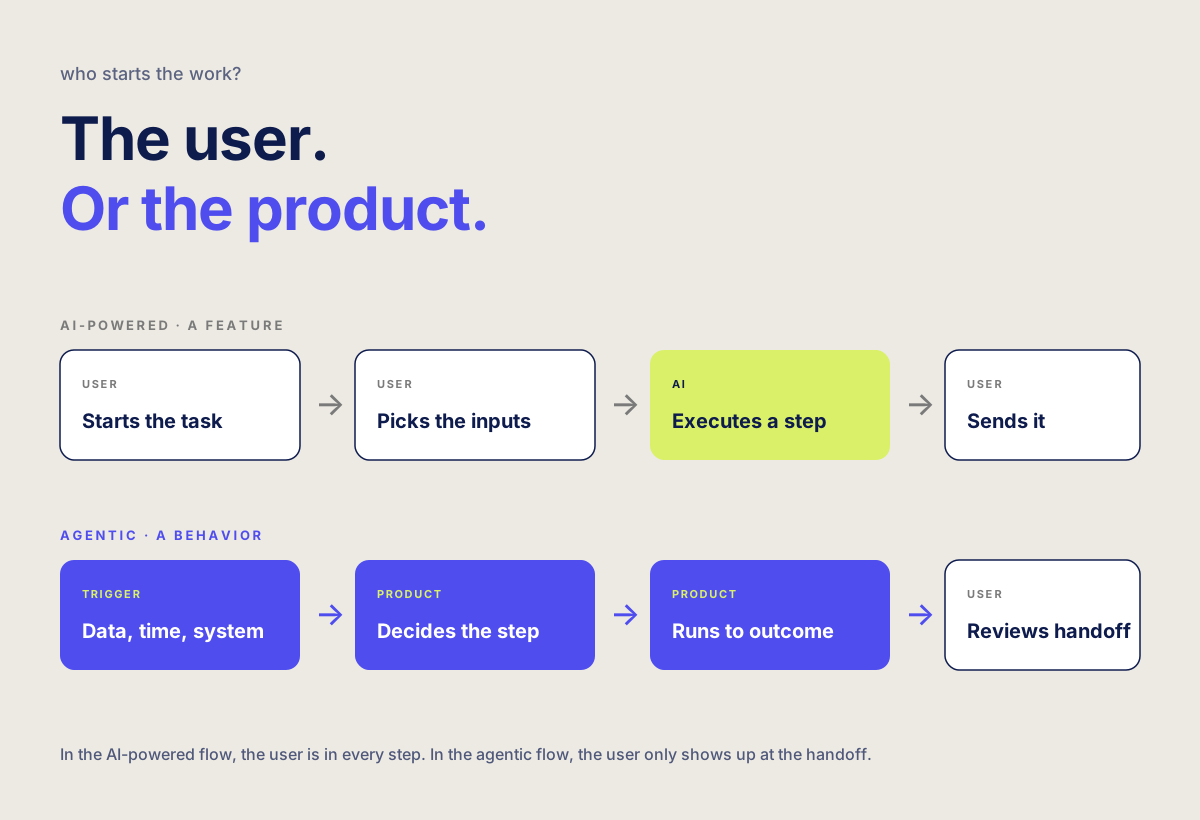
An AI-powered product uses AI to help the user execute a task the user started. An agentic product starts the task itself, decides what to do next, and runs the workflow to an outcome with the user only at the handoff.
Most B2B SaaS teams treat the two terms as synonyms in 2026. They are not synonyms. Picking the wrong label closes the demo and loses the pilot at stage two.
Key takeaways
AI-powered describes what's inside the product. Agentic describes what the product does.
A product is agentic only if it passes three checks: it starts work without a user prompt, it decides the next step on its own, and it owns the outcome until handoff.
B2B buyers evaluating agentic products ask four specific questions about autonomy, approval, audit trail, and ownership of mistakes. Answer them on the page.
The bar for "agentic" in 2026 is higher than the bar was for "AI-powered" in 2024. Buyers have been burned and they test.
The fix on the homepage is three lines: what triggers the work, what runs without the user, what the product hands back.
What is the difference between an AI-powered product and an agentic product?
An AI-powered product is a feature. The user starts the task. The product uses AI to help execute a step inside it. The user is still driving. The AI is a faster engine under the hood.
An agentic product is a behavior. The product starts the task. It decides what to do next on its own. It runs the workflow to an outcome. The user reviews, approves, or hands off, but the user did not pick up the controls to make it run.
These are not different shades of the same product. They are different products, with different buyers, evaluated against different criteria, sold at different price points.
If your homepage doesn't pick one, the buyer will pick for you. They usually pick wrong.
How do you tell if a product is actually agentic? The three-check test.
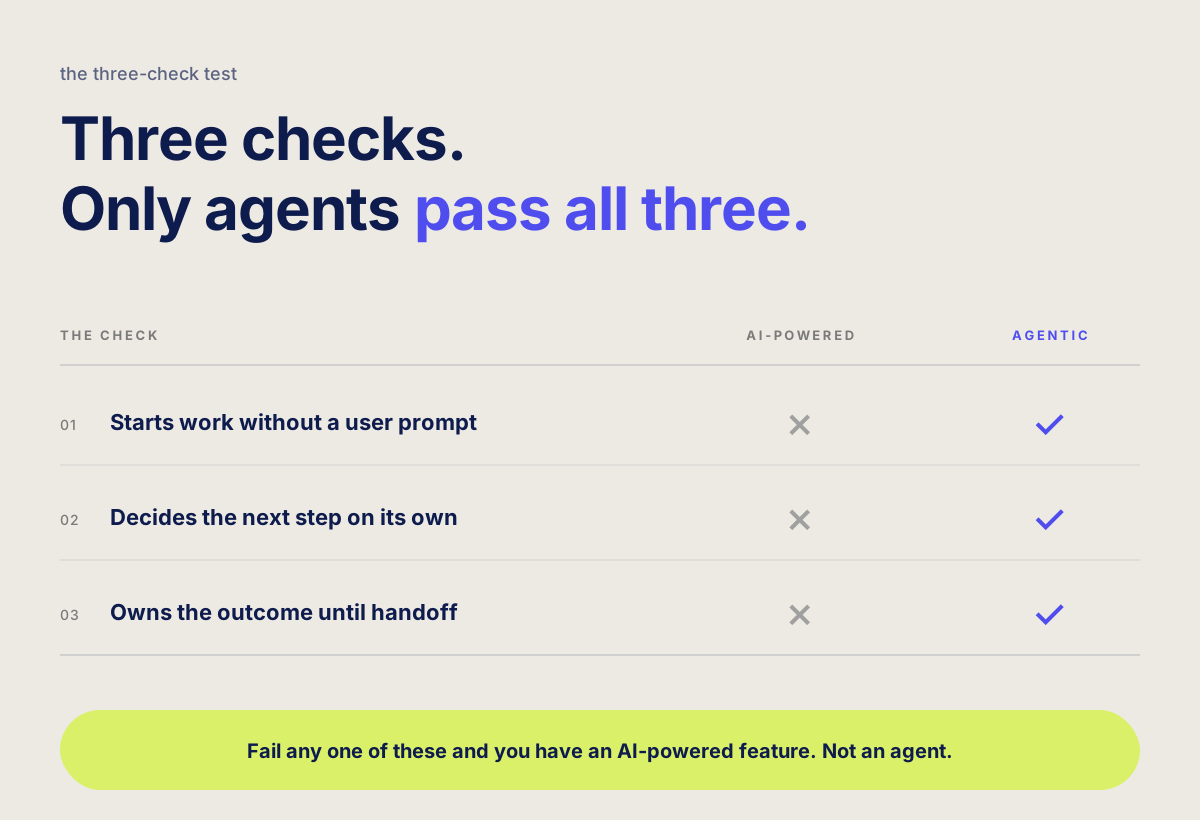
A product is agentic only if it passes all three checks. Most "agentic" launches in 2026 fail at least one.
A product is agentic only if it passes all three checks below.
Check 1. It starts work without a prompt from the user. The trigger is data, time, or another system. Not a button click. If the user has to open the product and tell it to go, you're describing a feature.
Check 2. It decides the next step on its own. No human picks between path A and path B at the decision points inside the workflow. The product has logic, judgment, or model-backed reasoning that makes the call.
Check 3. It owns the outcome until handoff. It runs from input to result without the user re-engaging mid-flow. When it surfaces something back, that's the handoff, not a checkpoint.
Fail any one of these and you have an AI-powered feature. That's fine. A faster step is a real product. Just don't sell it as something it isn't.
What does AI-powered vs agentic look like in practice? A sales inbox example.
Take a sales inbox tool. Same domain, same underlying model, two different products.
The AI-powered version drafts the reply. The user clicks send. The user picks which prospects to message. The user reads the threads to triage what's hot.
The agentic version triages the inbox on its own. Picks the prospects worth a reply. Drafts and queues. Surfaces the threads that need a human eye. Logs the action trail. The user opens the tool to review, not to operate it.
Completely different buyer ask. Completely different price point.
Rule 1. Match the label to the product. Why does mislabeling cost the deal?
If the user still clicks run, your product is not agentic. Don't claim it.
If the product starts the work on its own, your product is not just AI-powered. Don't undersell it.
Both directions of mislabeling cost you. Overclaiming puts you into pilots you will lose. Underselling buries your product alongside every "AI-enhanced" tool already on the buyer's shortlist.
Replace both labels on the homepage with three lines:
What triggers the work
What runs without the user
What the product hands back
Those three lines are positioning. Everything else is decoration.
Rule 2. Describe the workflow, not the model. Why shouldn't your homepage lead with AI?
Nobody buys "uses AI." B2B buyers buy a step that changes.
If your product is AI-powered, name the step that runs faster.
If your product is agentic, name the step that runs without them.
Model talk belongs in technical docs and security reviews. The homepage describes what changes for the buyer's week.
Rule 3. Name the limits. Why does scope honesty win agentic deals?
The buyer has been burned. AI launches in 2024 and 2025 overpromised at scale, and every PMM showing up in 2026 is paying for that history.
The strongest move you have is saying what your product won't do.
Where does the agent stop? What does it pause and ask the user to approve? What kinds of decisions does it route to a human? What data does it refuse to touch?
Honest scoping wins agentic deals. Hype loses them in pilot stage two, two months later, quietly.
What questions do buyers ask when evaluating agentic products?
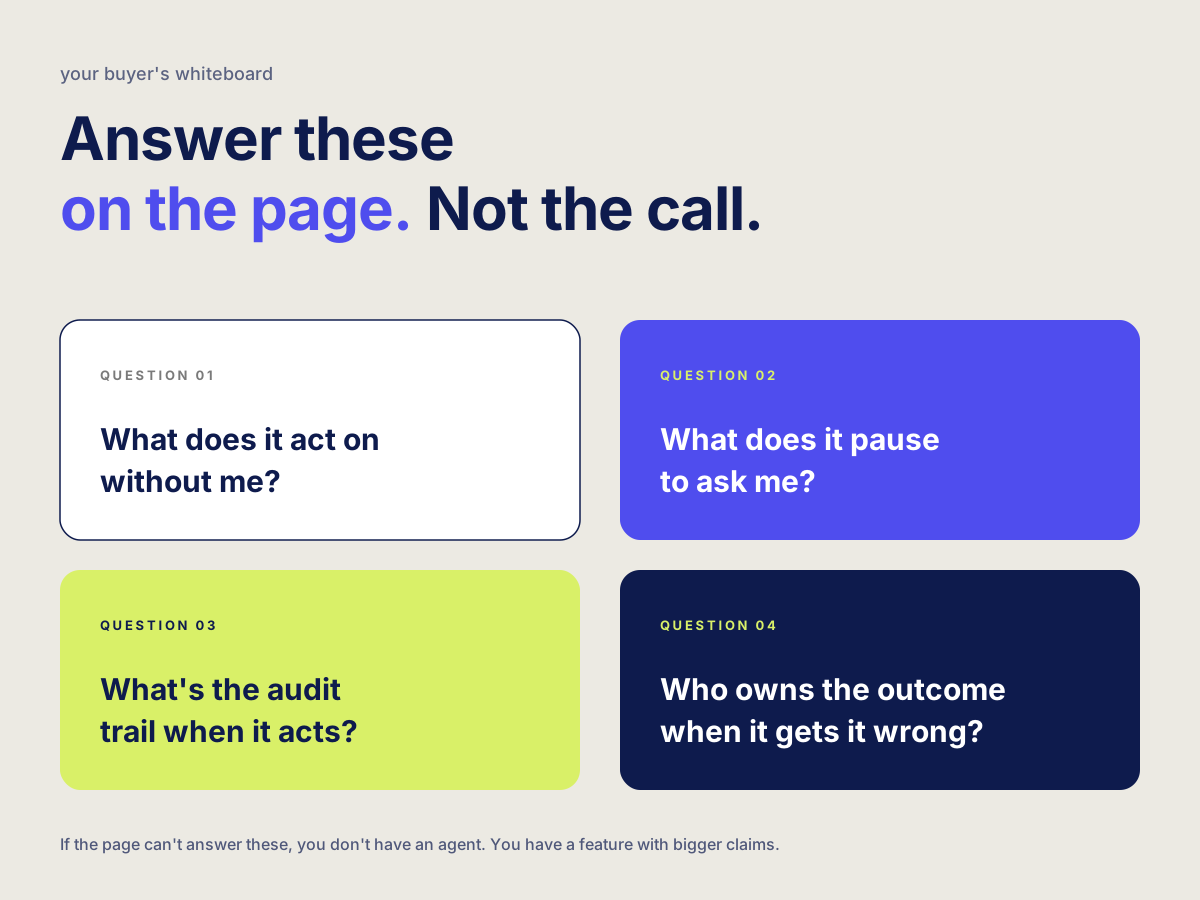
Answer these four questions on the page. If your page can't, you don't have an agent.
B2B buyers evaluating agentic products in 2026 are asking four specific questions. Answer them on the page, not on the demo call.
What does the product act on without me? Define the actions the agent takes autonomously.
What does the product pause and ask me to approve? Name the approval gates explicitly.
What's the audit trail when it acts? Describe what gets logged, where, and how it's reviewed.
Who owns the outcome when the product gets it wrong? State the responsibility model clearly.
If your page can't answer these, you don't have an agent. You have an AI-powered feature with bigger claims.
How do you test agentic product positioning before shipping? The swap test.
Before launching, run this test on your homepage headline.
Swap "agentic" for "AI-powered" in the headline.
If the headline still makes sense, you launched a press release. The copy is generic enough to fit either product, which means it isn't really describing yours.
If the headline falls apart, you launched a product. The copy is anchored to behavior specific enough that it only works if your product actually does what it says.
The same test in reverse, if you're AI-powered: swap "AI-powered" for "agentic." If the page still reads the same, you're over-claiming. Pull it back.
Why is the bar higher for agentic products in 2026?
The bar for calling a product an agent in 2026 is higher than the bar was for calling a product AI-powered in 2024. The gap between what the label promises and what the product actually does is wider. B2B buyers know. B2B buyers test. They compare your product against ones that genuinely act on their own.
If you sell a feature, sell the speed. There's a market for that.
If you sell an agent, prove the autonomy on the page before the buyer asks for it on the call.
Either is a real product. Pretending to be one when you're the other is the mistake.
FAQ
Is an LLM-powered chatbot an agentic product? No. A chatbot answers when prompted. An agentic product starts work on its own and runs to an outcome. If the user has to type to make it act, it's a feature, not an agent.
Can a product be both AI-powered and agentic? Technically yes. Most agentic products use AI to execute steps. The label question is about what you lead with on the homepage. If the product's core differentiator is autonomy, lead with agentic. If the differentiator is a faster step in a user-driven flow, lead with AI-powered. Don't claim both at the same time on the same page.
Does "autonomous" mean the same thing as "agentic"? Close, but not identical. "Autonomous" emphasizes the absence of a human operator. "Agentic" emphasizes the product's ability to act, decide, and own outcomes. Most B2B SaaS teams use them interchangeably in 2026. Agentic is the term winning the category fight.
What if my product is borderline between AI-powered and agentic? Lead with the part that is most specific to your product. If one workflow is truly agentic and ten features are AI-powered, lead with the one agentic workflow. Don't slap "agentic" across the whole homepage to cover the entire product.
How should I structure my homepage for an agentic product? Lead with the workflow change, not the model. State what triggers the work, what runs without the user, and what the product hands back. Answer the four buyer questions visibly. Name the autonomy limits as a trust signal. Skip every word a competitor could paste onto their page unchanged.
How do I know if my positioning is generic? Paste a competitor's logo on your homepage. If the page still makes sense, the copy is generic and the positioning isn't specific to your product. Rewrite until the page only works for your product.
What's the biggest positioning mistake B2B SaaS teams make with AI products in 2026? Treating "AI-powered" and "agentic" as the same label. They describe different products with different buyers. Picking the wrong one closes the demo and loses the pilot at stage two.
